Textures
How to Color Dinosaur Skin and Scales
Dinosaur skin can look textured without covering the entire animal in tiny scales. Use broad color zones first, then add selective texture where it helps the form.
- Time
- 20–35 minutes
- Difficulty
- Easy
- Steps
- 5
Original visual guide
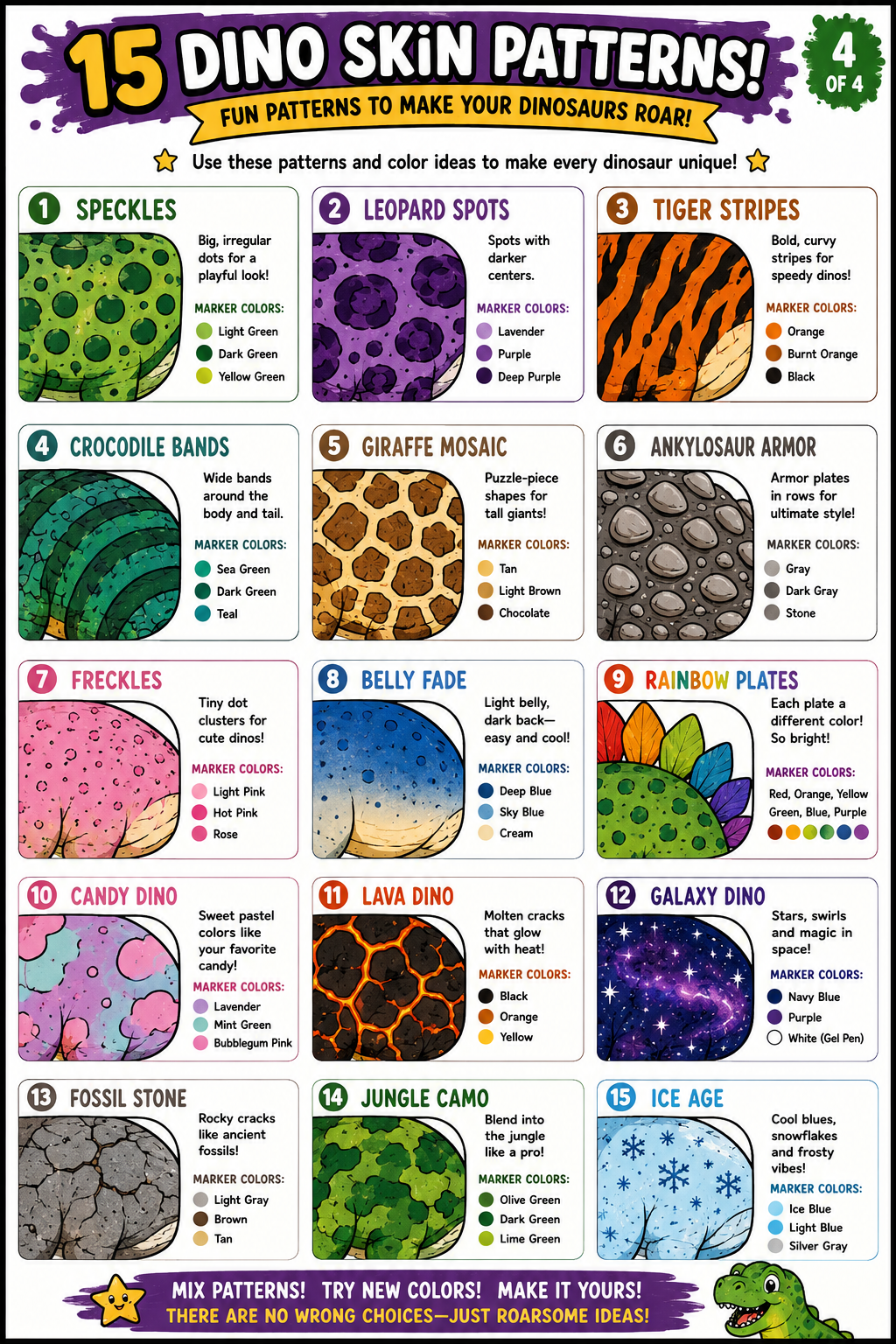
Pick a pattern. Then make it roar.
Use this 15-pattern overview to choose a skin recipe before working through the coloring steps.
Gather first
What you’ll need.
- Three related body colors
- A darker shadow color
- Colored pencils or markers
- White pencil, optional
One step at a time
Let’s color it.
- 01
Pick a three-color body plan
Choose a main body color, a lighter belly color, and one accent for stripes, spots, plates, or horns.
- 02
Color the large zones
Fill the body and belly before adding texture. Keep the major color pattern easy to recognize from across the page.
- 03
Shade the overlaps
Darken beneath the jaw, belly, tail, arms, plates, and any leg that sits behind another.
- 04
Add scales selectively
Place small curved marks near joints, along the back, and around the tail base. Leave broad areas smooth.
- 05
Repeat the accent color
Use the stripe or spot color in three or more places so the dinosaur feels designed rather than randomly patterned.
Watch for these
Common mistakes.
- Drawing identical scales over the whole dinosaur
- Adding texture before choosing the main color pattern
- Using the darkest color inside every outline
- Forgetting shadows where body parts overlap
Try it now
Practice prompt.
Color the same simple dinosaur three ways: natural greens, warm desert colors, and a completely imaginary candy palette.
Saved for later
5 Easy Steps for Coloring Dinosaur Skin
This tutorial is organized into a clear visual sequence so it can become a Pinterest step-by-step post later.
Put it on the page
Practice inside Dinosaurs Break Everything.
Use the technique in a character-led coloring world with bold lines and room to experiment.